5 min read
How to choose the best PaaS (for your project)
Choosing a PaaS isn’t just about picking a technology. It’s about deciding how your applications will run, scale, and evolve over time.
Choosing a PaaS isn’t just about picking a technology. It’s about deciding how your applications will run, scale, and evolve over time.
With dozens of platforms claiming to be "the best PaaS", it’s tempting to focus on feature lists and comparison pages. (Although, we’ll admit it, we’re quite proud of how Scalingo tends to show up in those.)
The thing is, they rarely tell the full story. What really matters is how well a platform fits your applications, your team, and your growth plans. A good PaaS should make life easier, not introduce new constraints a few months down the line.
In this article, we take a practical look at how to choose the best PaaS for your business. Instead of repeating marketing promises, we focus on the criteria that actually matter in real-world conditions: operational fit, scalability, security, costs, support, and long-term flexibility.
Define what your business actually needs
Before diving into feature lists or pricing calculators, it’s worth taking a step back and grounding the discussion in your own context.
The same PaaS can feel perfectly suited in one situation and completely wrong in another. What works well for a small team launching a first product is rarely the right setup for a service already running in production with real traffic and real commitments.
In practice, priorities tend to shift quickly as a product matures. Early on, speed and simplicity usually matter most: getting an application online, iterating fast, and keeping operational overhead low. Later, other concerns take the lead, such as availability guarantees, data residency, compliance, or the ability to scale predictably under load.
Asking a few concrete questions early on can already help narrow down your options:
What are you building, and how critical is it to your business?
How do you expect usage to evolve over the next months or years?
Are there constraints you cannot compromise on, such as regulations, regions, or uptime expectations?
You don’t need to have every answer upfront. But being clear on what matters today, and on what is likely to matter next, makes it much easier to choose a PaaS that will support your growth rather than become something you have to work around later.
Make sure your stack is supported
Before going any further, it is worth checking a very practical point: does the PaaS support the technologies you already use?
Not all PaaS platforms support the same programming languages, frameworks, or runtimes. The level of support can also vary significantly. Some platforms are intentionally opinionated, while others aim to be more flexible.
If you have already chosen a language or framework, moving to a new PaaS should not force you to rethink that decision. It is worth verifying:
Which languages and frameworks are supported out of the box
Whether custom runtimes or buildpacks are available
How upgrades and long-term support are handled
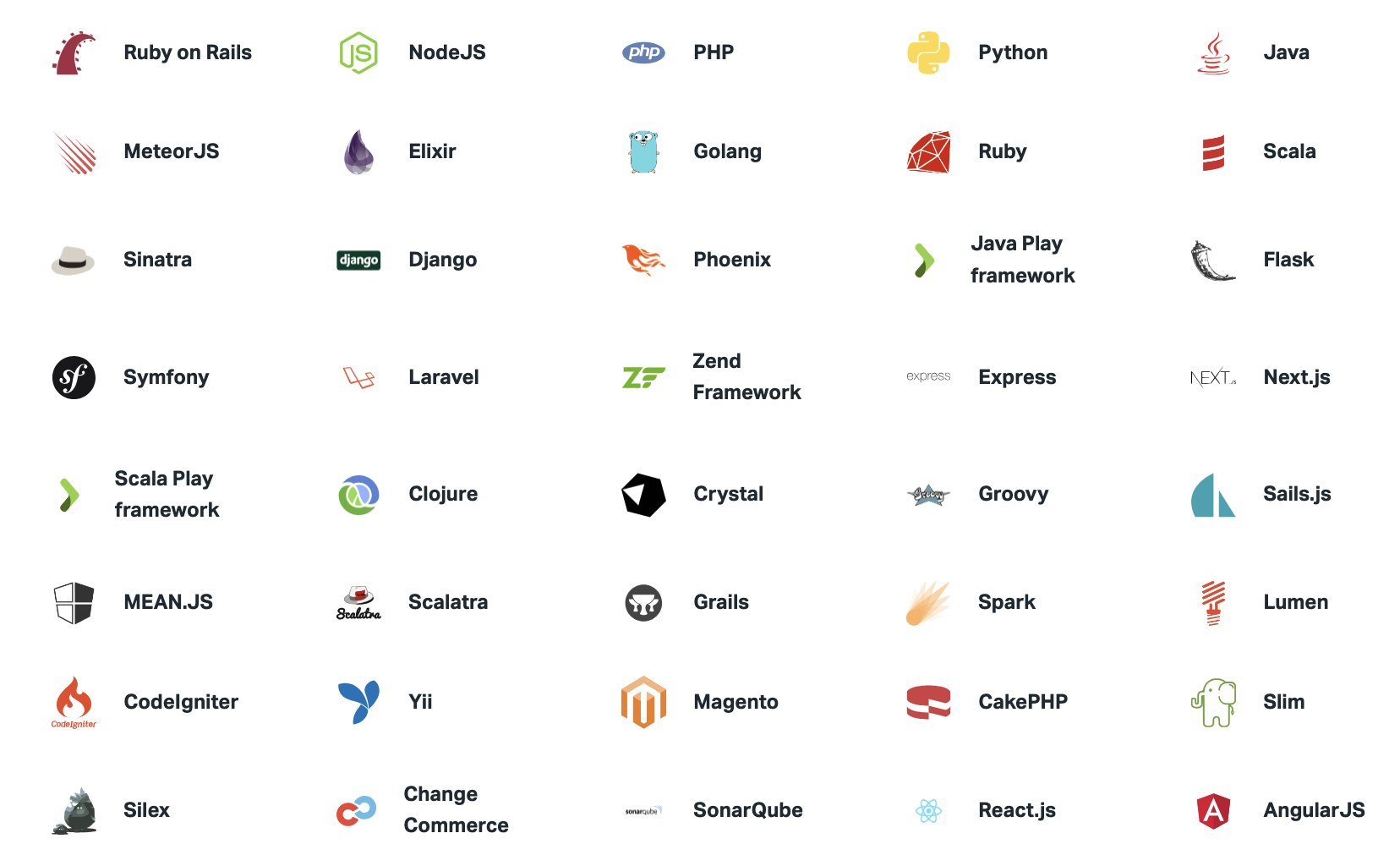
Beyond application runtimes, managed database services are just as important. Many teams rely on managed PostgreSQL, MySQL, OpenSearch and other managed databases to avoid running and maintaining these components themselves.
Here again, differences between PaaS offerings matter. Some platforms provide tightly integrated managed services, while others expect you to connect and operate them externally. A PaaS that supports your language but leaves you to manage your own databases may still create more operational work than expected.
At Scalingo, we try to make this easier by supporting many common languages, frameworks, and managed services. That said, the real takeaway applies to any PaaS: the best PaaS for your business should fit your stack, not force you to adapt your applications to it.
Choose the right level of operational responsibility
One common assumption when choosing a PaaS is that it removes operations entirely. In reality, a PaaS reduces operational work, but not always in the same way.
Some PaaS platforms take almost everything off your plate: infrastructure, scaling, runtime updates, and most day-to-day operational concerns. Others give you more control and flexibility, but expect your team to stay involved in platform-level decisions. Neither approach defines the best PaaS by itself. What matters is how well it matches your team.
A small product team without dedicated infrastructure expertise will usually benefit from strong defaults and minimal operational overhead. Teams with existing DevOps or SRE experience may be comfortable keeping more control, especially if they have specific networking, security, or deployment requirements.
The key question when choosing a PaaS is not “do we want ops or not?”, but how much operational responsibility do we want to keep?
More managed vs. more control
More managed PaaS: fewer decisions, faster onboarding, less operational overhead, but less customization
More configurable PaaS: more flexibility and control, but more responsibility for your team
The right choice here is the one that removes the right amount of complexity for your team.
Developer experience in day-to-day operations
What often determines whether a PaaS holds up over time is how well it fits into your team’s daily workflow.
Once an application is in production, developer experience becomes very concrete. It shows up when deploying changes safely, understanding what is happening when something goes wrong, and fixing issues without unnecessary friction. These moments have a direct impact on delivery speed, reliability, and the overall operational load on the team.
When choosing a PaaS, a few aspects are especially revealing:
Deployment workflows, such as Git-based deploys, CI/CD integration, and rollbacks
Environment management across development, staging, and production
How quickly a new team member can get started without digging through extensive documentation
These are the things teams interact with every day. When they work well, they reduce friction, make workflows predictable, and help teams stay focused on building and shipping.
Beyond day-to-day workflows, it’s also worth paying attention to how the PaaS provider operates when things don’t go as planned.
Incidents happen on every platform. What matters is how they are handled: clear communication, transparency during the incident, and postmortems that help teams understand what happened and move forward with confidence.
Plan for growth, scalability, and reliability
Most applications don’t stay the same size for long. Traffic grows, usage patterns change, and what worked fine yesterday may not work tomorrow.
That’s why it’s important to understand how a PaaS handles growth in practice. When evaluating a platform, a few simple questions can help clarify how scaling is managed:
Can I scale my application by adjusting the number of running instances?
Can different parts of my application scale independently?
Can scaling be automated rather than handled manually?
Scalability alone isn’t enough, though. As your application grows, reliability becomes just as critical. It’s worth looking at how the PaaS approaches availability, redundancy, and recovery:
Does the platform provide built-in data protection and recovery for the services it manages?
Is uptime clearly defined?
The best PaaS make growth feel predictable. Scaling shouldn’t require a redesign or emergency fixes. It should be something the platform supports by design, even as your application and its usage evolve.
Do not treat security and compliance as an afterthought
Security and compliance are rarely what drive teams to choose a PaaS in the first place. In practice, they are far more often the reasons teams end up questioning that choice later on.
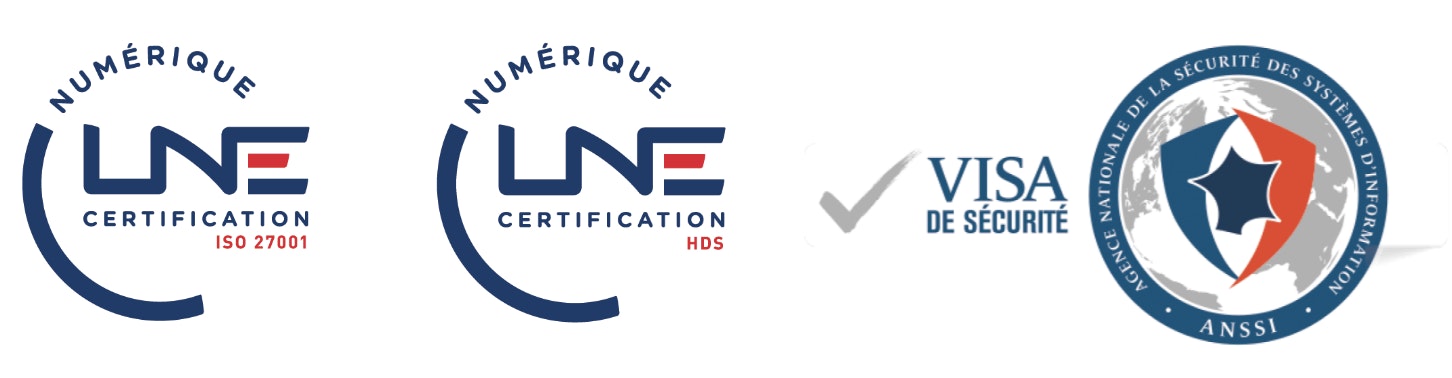
Rather than relying on high-level promises, it’s worth looking at how security is demonstrated and audited. Certifications provide a concrete signal of the controls, processes, and guarantees a platform has in place, especially when infrastructure and operations are involved.
As your business grows, expectations around security and compliance tend to increase. New customers, new markets, or new use cases can quickly turn optional requirements into mandatory ones. Choosing a PaaS that already operates within a certified framework can significantly reduce the effort required to meet those expectations later.
A note on certifications and regulated environments
Several certifications are particularly relevant when evaluating a PaaS:
ISO 27001 indicates that the provider operates an information security management system with defined processes for risk management, access control, incident handling, and continuous improvement.
SecNumCloud, particularly at the infrastructure level, is a strong signal for organizations operating in sensitive or sovereign contexts in France, where control over infrastructure and operations matters.
HDS (Hébergement de Données de Santé) is mandatory for handling health data in France. Using a PaaS that already meets HDS requirements can dramatically reduce both operational complexity and legal exposure for healthcare-related workloads.
In regulated environments, certified providers are not just a nice-to-have. They define what is realistically achievable without building and maintaining a significant compliance and security layer yourself.
Understand costs and long-term flexibility
Pricing is often where choosing a PaaS becomes difficult.
Most platforms look affordable at first. Over time, costs change as usage grows, traffic increases, and managed services become critical. That is why choosing the best PaaS requires looking at total cost of ownership, not just initial pricing. Things to consider:
Pricing predictability as you scale
What is included by default
Additional costs related to add-ons
Operational costs you no longer have to pay
“ Running our platform on Scalingo's PaaS gives us an estimated ROI of over €80,000 per year. This is largely due to lower operational costs and built-in HDS compliance. ”
Heloa, Healthcare start-up
But cost is only part of the picture. Long-term flexibility is just as important, and it’s often harder to assess upfront.
In a PaaS context, vendor lock-in usually comes from deep technical and operational coupling: proprietary services, platform-specific APIs, or workflows that are difficult to reproduce elsewhere. Over time, these choices can shape your architecture and operating model more than you initially expect.
This is especially common with large cloud providers, where higher-level managed services can accelerate delivery, but also make it harder to reassess your options later. The more your application relies on these services, the more effort a move requires.
This doesn’t mean lock-in should be avoided at all costs. What matters is treating it as a strategic decision, not an accidental one.
A useful question to ask early on is simple: if we needed to move in the future, would it be painful but manageable, or effectively impossible?
Do not underestimate the importance of support
Support is easy to overlook until something breaks in production.
When choosing a PaaS, it’s worth looking beyond the existence of a support channel and understanding how support actually works in practice. Key questions include:
Can you reach a human when you need to?
Are response times clearly defined?
Is support available in your time zone?
And, just as importantly, do the people answering really understand the platform?
Support models vary widely across providers. Some rely on front-line support teams that escalate issues internally, others may outsource support entirely.
At Scalingo, support has always been handled, at least in part, by our own engineering team. Our engineers take turns handling support requests, which means the people who build the platform are also the ones helping users day to day. It’s an approach we care deeply about, and one that many of our users consistently tell us they value. It favors a real understanding of the platform and practical, context-aware answers over scripted responses.
For more complex or sensitive applications, it’s also worth evaluating higher levels of support that may be offered. These can include 24/7 availability, proactive monitoring, dedicated support teams, and stronger SLA commitments, which can be critical for workloads with strict availability or compliance requirements.
Validate your choice with a test or proof of concept
No matter how convincing a PaaS sounds on paper, the most reliable way to evaluate it is to test it in a real situation.
Most providers offer free credits or trial periods, which makes it possible to run a short proof of concept with a real application. If that’s not available, testing with a representative sample app can still be enough to surface meaningful differences.
This phase helps you see how the platform fits into your actual workflow: how easy it is to deploy, how it behaves under load, how observability works in practice, and how responsive support is when you need it.
A short, focused test often provides clarity very quickly. It’s one of the best ways to build confidence that a PaaS will hold up once it’s running in production.
Conclusion
Choosing a PaaS is a long-term decision that shapes how your applications are built, operated, and evolved.
Beyond features or positioning, what matters is alignment: with your team’s operating model, your technical constraints, and your growth trajectory. A platform that fits these dimensions well will quietly remove friction over time. One that doesn’t will eventually get in the way.
There is no universal “best” PaaS. But there is a right one for your context. Taking the time to evaluate it carefully is one of the most important infrastructure decisions you’ll make.
👉 Want to see how this translates in practice?
If you’re currently evaluating PaaS options, you can try Scalingo with a real application during a 30-day free trial. It’s a simple way to see whether our approach fits your team and your workloads. And if it turns out we’re not the right fit, we’re always happy to help point you toward alternatives.

Jennifer Taylor
At Scalingo, Jennifer leads growth and marketing initiatives, helping shape the company’s voice in the fast-evolving PaaS and cloud ecosystem. She loves translating complex cloud concepts into clear, engaging insights.
Stay Updated
Get articles and platform updates in your inbox.
Ready to Deploy with Confidence?
Experience zero-downtime deployments, intelligent auto-scaling, and fully managed infrastructure. Start deploying your applications on Scalingo today.
No credit card required • Deploy in minutes • Cancel anytime